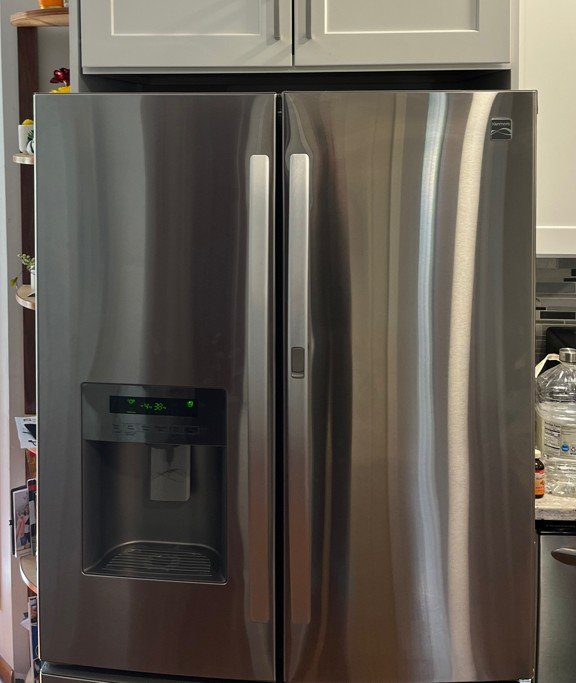
You walk into the kitchen and there it is — a puddle of water spreading out from under your refrigerator. Maybe it’s just a small drip. Maybe it’s a full-on puddle that’s been there for a while and you only just noticed. Either way, your first thought is probably: is this going to ruin my floor, and how bad is this going to be to fix?
Here in Buffalo Grove, this is one of the most common calls we get at AMZ Appliance Repair. The good news is that a leaking refrigerator is almost always fixable — and in many cases, it’s something you can diagnose yourself before deciding whether to call a technician.
Let’s walk through the five most common reasons your refrigerator is leaking water, starting with the easiest one to check.
1. A Clogged or Frozen Defrost Drain
This is, by far, the most common reason a refrigerator leaks water — and it’s something almost every fridge develops eventually.
Inside your freezer, there’s a small drain hole near the back or bottom that channels melted frost away during the automatic defrost cycle. That water is supposed to travel down a tube to a drip pan underneath the fridge, where it quietly evaporates. When that drain hole gets clogged — usually with food debris, ice buildup, or a bit of mold — the water has nowhere to go. Instead of draining properly, it backs up and leaks out from the bottom of the freezer or refrigerator section, ending up as a puddle on your kitchen floor.
How to check it: Remove the bottom drawer or back panel inside your freezer (this varies by model) to locate the drain hole. If you see ice blocking it, that confirms the issue.
A simple first step: Unplug the refrigerator and let it sit with the doors open for a few hours to let any ice around the drain melt naturally. Once it’s thawed, you can use a turkey baster filled with warm water, or a pipe cleaner, to gently flush the drain hole and clear the blockage.
If the clog keeps coming back every few months, that’s often a sign the door seal isn’t sealing properly and letting in extra humidity — which brings us to reason #2
2. A Damaged or Dirty Door Seal
The rubber seal — also called the door gasket — running around the edge of your refrigerator and freezer doors does more work than people realize. It keeps cold air in and warm, humid air out. When that seal gets cracked, torn, or coated in food residue, it can’t form a tight closure anymore.
The result: warm air from your kitchen continuously sneaks into the fridge. This causes extra condensation to build up inside, which can drip down and pool at the bottom of the unit — and eventually onto your floor. It also makes your refrigerator work much harder than it should, which shortens its overall lifespan.
How to check it: Close the door on a dollar bill so it’s halfway in, halfway out. Try to pull it out. If it slides out easily, the seal isn’t gripping properly in that spot. Repeat this test in several places around the door. Also do a visual check — look for cracks, tears, or stiff, brittle sections in the rubber.
What to do: A buildup of food residue can sometimes be cleaned off with warm water and a soft cloth, which restores the seal in mild cases. If the gasket itself is torn or has lost its elasticity, it will need to be replaced. This is a straightforward, affordable repair that solves the leak and saves you money on your energy bill at the same time.
3. A Cracked or Improperly Seated Drip Pan
Underneath most refrigerators is a drip pan that collects the water from the defrost cycle so it can evaporate slowly and harmlessly. Over the years, especially on older units, this pan can crack, warp, or shift out of position when the fridge is moved — say, during a kitchen cleaning or a move.
When the pan is cracked or sitting at the wrong angle, water meant to collect and evaporate instead spills out onto the floor, usually pooling right at the base of the fridge.
How to check it: Most drip pans are accessible by removing a front grille panel at the bottom of the refrigerator, or sometimes from underneath if you can safely tilt the unit back slightly. Check whether the pan is cracked, sitting level, and properly seated in its bracket.
What to do: If the pan has simply shifted out of place, it’s often a quick fix to slide it back where it belongs. If it’s cracked, replacement pans are inexpensive and easy to install — though accessing the right spot can be tricky depending on your model, and a technician can usually have it done in minutes.
4. A Blocked or Frozen Water Line (Ice Maker & Water Dispenser Models)
If your refrigerator has a built-in ice maker or a water dispenser, there’s a water supply line running into the back of the unit. Leaks from this line are common and have a few different possible causes:
- A loose or improperly seated connection where the line meets the refrigerator
- A small crack or pinhole in the line itself, often from age or being kinked behind the fridge
- A frozen section of the line inside the freezer wall, which can crack as it expands with ice
- A failing water inlet valve that doesn’t fully shut off, allowing a slow drip over time
This type of leak is often sneakier than the others because the water can travel along the line or down the back of the fridge before pooling on the floor — sometimes a good distance away from where the actual problem is.
How to check it: Carefully pull the refrigerator away from the wall (have a towel ready) and inspect the water line for kinks, cracks, or visible moisture at the connection points. If you see frost or ice forming on the line inside the freezer compartment, that’s a sign of a slow freeze-and-crack cycle that needs professional attention.
What to do: A loose connection can sometimes be hand-tightened, but a cracked line or a failing inlet valve needs to be replaced by a technician. Continuing to use an ice maker with a damaged line can lead to bigger water damage over time, so it’s worth addressing promptly.
5. The Refrigerator Isn’t Level
This one surprises a lot of people, but it’s a genuinely common cause of leaks — especially after a refrigerator has been moved, or in homes with slightly uneven kitchen flooring.
Refrigerators are designed to sit very slightly tilted backward — just a degree or two — so that any condensation or defrost water naturally flows toward the back of the unit and into the drip pan, rather than forward toward your kitchen floor. If the fridge is sitting level, tilted forward, or unevenly side to side, water can run the wrong direction and spill out the front or sides instead.
How to check it: Place a level on top of the refrigerator, side to side and then front to back. Most refrigerators have adjustable front legs or rollers specifically for this purpose.
What to do: Adjust the front legs slightly higher than the back — most manufacturers recommend about a quarter to half inch of backward tilt. This small adjustment alone resolves a surprising number of “mystery leak” calls.
When to Call a Professional in Buffalo Grove
Quite a few refrigerator leaks can be checked and sometimes resolved with the steps above. But if you’ve gone through this list and the leak keeps coming back — or if you’re not comfortable pulling the fridge away from the wall or accessing the drip pan yourself — it’s time to call a professional.
A persistent leak left unaddressed can damage your flooring, encourage mold growth underneath the appliance, and in the case of a water line issue, lead to a larger water damage situation behind your fridge that you won’t notice until it’s a bigger problem.
AMZ Appliance Repair offers same-day refrigerator repair 7 days a week — including weekends — across Buffalo Grove, Wheeling, Lincolnshire, Riverwoods, Arlington Heights, Long Grove, and surrounding Lake County and Cook County areas.
We’ll come out, properly diagnose exactly where the water is coming from, and give you the exact cost to fix it before we touch anything. No guessing, no surprises.
📞 Call us now: (773) 822-1610 🗓️ Book online: amzappliancerepair.com/buffalo-grove/appliance-repair/refrigerator-repair/
- FAQs
Have A Question On Your Mind?
The most common causes are a clogged defrost drain, a damaged door seal, a cracked or misaligned drip pan, a problem with the ice maker water line, or a refrigerator that isn't sitting level. Start by checking the defrost drain and door seal, since those are the easiest to inspect yourself. If the leak continues, call AMZ Appliance Repair at (773) 822-1610 for a same-day diagnosis.
It's not usually a true emergency, but it shouldn't be ignored either. A persistent leak can damage flooring and encourage mold growth underneath the unit over time. If the leak is significant or keeps returning, it's worth getting it looked at promptly rather than letting it continue.
Some causes — like a clogged defrost drain, a refrigerator that isn't level, or a dirty door seal — can often be checked and sometimes resolved on your own. Others, like a cracked water line or a failing inlet valve, are better handled by a trained technician to avoid further water damage. Our team can diagnose exactly which one you're dealing with.
Yes. We diagnose and repair ice maker and water dispenser line issues, including cracked lines, loose connections, and failing water inlet valves. Call (773) 822-1610 — we offer same-day service 7 days a week across Buffalo Grove and the surrounding area.
If the pan is visibly cracked, warped, or no longer sitting level in its bracket, it likely needs replacement. A technician can quickly inspect the pan during a service visit and let you know whether it needs to be repositioned or replaced entirely.
Yes. All of our technicians are fully licensed, insured, and trained to provide safe, professional, and reliable appliance and HVAC repair services.
Share this post: on Twitter on Facebook